Japanese Indie Game Paradox: Why Certain Low Budget Titles Thrive
Some indie games defy their modest production scale to achieve surprising success in Japan, and it is not simply a matter of luck.

Written by
Carter Gaming Lab
Articles
May 19, 2026
4 min read
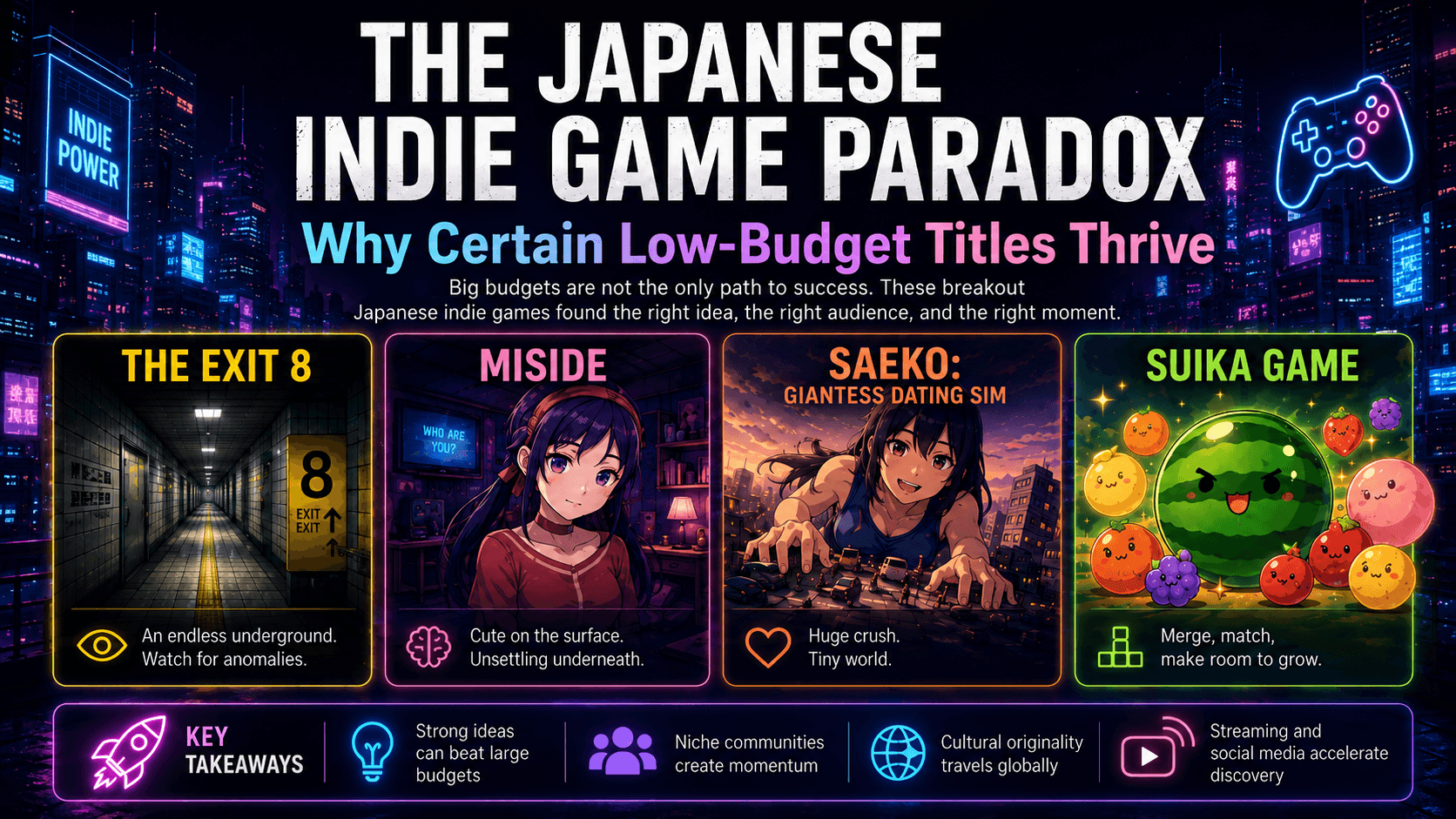
Japan’s indie game scene has often been overshadowed by the dominance of major publishers, yet a handful of low budget titles have broken through to capture massive audiences. Recent examples of successful Japanese indie games, like The Exit 8, MiSide, Saeko: Giantess Dating Sim, and Suika Game, have each succeeded for different reasons, showing that creative focus and cultural resonance can outperform marketing muscle.
The Exit 8: Minimalist horror that feels familiar

Developed on a tiny budget in less than a year, The Exit 8 places players in an unsettling underground walkway modeled after Japanese metro stations. The game builds tension through repetition and subtle environmental changes, creating a deeply atmospheric experience that resonated with horror fans. It has sold more than 500,000 copies on Steam and reached over 1.5 million downloads across platforms as of March 2025, sparking not only a sequel but also a live action film project.
MiSide: Cute and creepy in equal measure

MiSide pairs a pastel, almost comforting art style with disturbing psychological horror elements. This contrast has proven magnetic for Japanese audiences, aided by viral moments on social media and streamer playthroughs. The game gathered more than 40,000 overwhelmingly positive reviews on Steam, showing how a strong concept can dominate attention even without big studio resources.
Saeko: Giantess Dating Sim – absurdity with emotional depth

Saeko: Giantess Dating Sim blends dark comedy, romance, and unsettling power dynamics into a visual novel experience unlike anything from major publishers. Released in May 2025, it sold over 10000 copies within days, earning “Very Positive” feedback from players. Its pixel art style, branching storylines, and offbeat premise have drawn both curiosity and loyal fans.
Suika Game: Puzzle simplicity meets viral spread
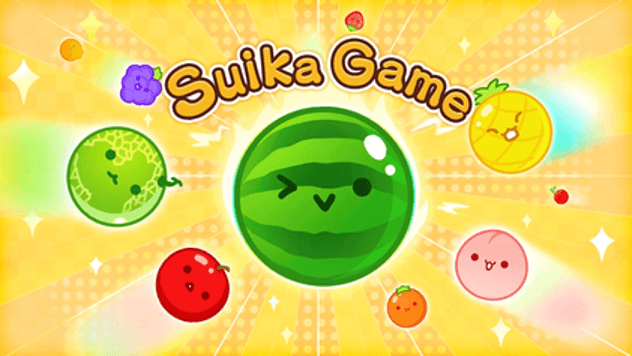
Known internationally as “Watermelon Game,” Suika Game became a cultural sensation in Japan in late 2023. Its deceptively simple fruit merging mechanics made it highly accessible, while its addictive gameplay loop encouraged replayability. The game thrived through streaming exposure and word of mouth, eventually being released on Nintendo Switch and reaching millions of players. It also became a staple at Japanese indie game showcases, drawing crowds and sparking competitive community events.
Common threads in their success
Across these different titles, four elements appear consistently:
• Distinctive identity – Each game delivers a clear, memorable hook, whether through art direction, premise, or gameplay mechanic.
• Focused scope – Rather than attempting large scale systems, developers refine a single strong idea until it shines.
• Accessible platforms – Distribution on Nintendo Switch, Steam, or both makes it easy for players to discover and share these games.
• Community amplification – Events such as BitSummit and Tokyo Indie Games Summit, along with organic streaming exposure, have been essential to building momentum.
Lessons for indie developers targeting Japanese Gamers
For indie devs, Japan offers fertile ground if approached with the right strategy:
1. Create a strong look or unique idea that matches Japanese tastes. This can be nostalgic, surreal, or emotionally engaging.
2. Use accessible digital distribution platforms that allow easy entry for players.
3. Participate in Japanese indie game events to gain visibility and media attention.
4. Embrace creative risk; Players are hungry for experiences they cannot get from major franchises.
Japan rewards creativity, clarity, and cultural understanding. While AAA titles will always dominate the charts, indie games that dare to be different can carve out passionate audiences and achieve financial success far beyond expectations.
For insights on launching indie projects in Japan and turning cultural resonance into lasting market presence, contact Carter Gaming Lab.